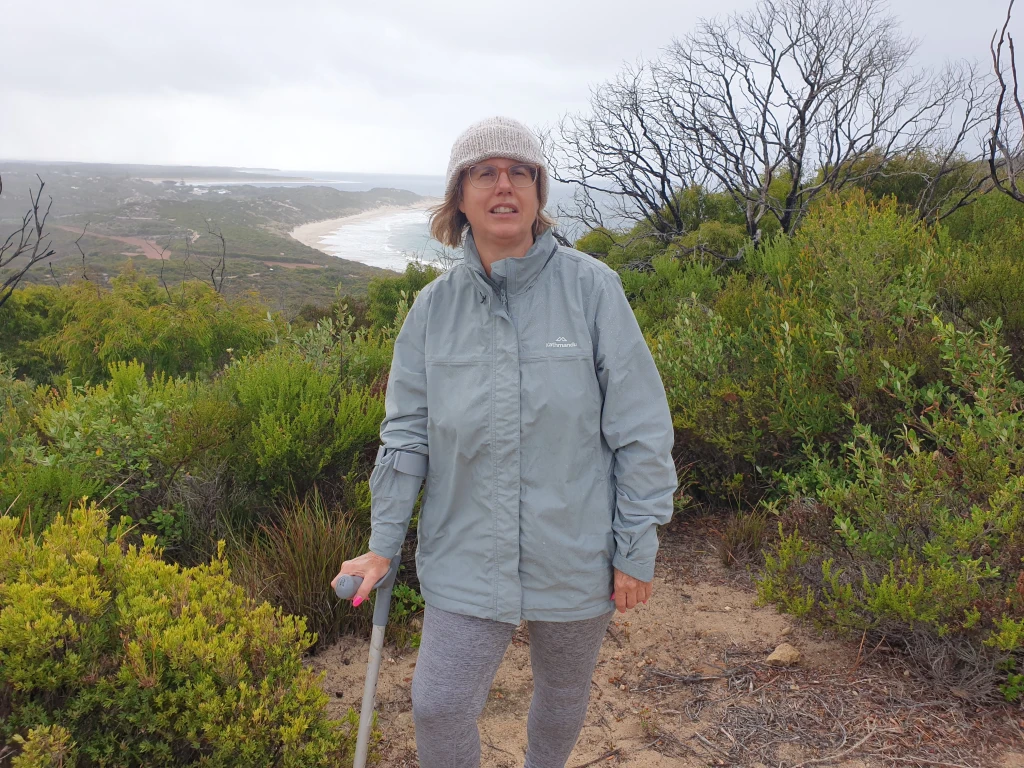
Life can throw you curveballs, sometimes literally. A seemingly harmless fall that fractured my leg last year unveiled a hidden enemy: low bone density. It was a wake-up call, underscoring it wasn’t enough to focus on eating healthier; I also needed to prioritize exercise as part of living a healthier life.
As a person who has avoided exercise for most of my life, this post is about documenting what I need to do and making myself accountable to actually do the exercise needed to improve my bone health and reduce my risks of chronic disease while hopefully sharing tips that might help others!
Getting Started
The biggest hurdle? My brain resisting exercise. Thankfully I’m not alone.
Ever wonder why that voice telling us to skip exercise seems so loud (except for the fitness enthusiasts among us)? It’s because our bodies are programmed by millions of years of evolution to prioritize rest. Back then, energy meant survival. Now, while we don’t need to constantly hunt and gather, that instinct to conserve energy remains. Our modern lives require far less movement, but our bodies still have a natural preference for relaxation. This explains why we often favor relaxation over exercise.
Prior to my leg injury, my daily 10,000 steps kept me active but it isn’t enough for bone health and reducing risks of chronic disease.
I’ve approached the development of my exercise program much like I did with improving my diet. I sought guidance from experts—in my case, Exercise Physiologists—to learn correct form, technique and suitable exercises for where I’m at. Similarly, I’ve applied the same level of dedication to researching exercise for bone health and chronic disease as I have to understanding healthy eating.
Exercise and Bone Health
Exercises that show the most benefit for bone health are when the exercise includes the following three variables done together:
- Weight bearing – you want the effect of gravity on bone.
- Muscle load – you want the pulling of muscles on bone.
- Impact – increased forces on bone through impact with the ground.
Activities that include all three variables of weight bearing, muscle load and impact have more benefit than exercises that only include two variables. Exercises that only include one variable have minimal impact on bone development. For example, exercise like swimming or bike riding doesn’t benefit bone health because it isn’t weight bearing and doesn’t involve impact.
An exercise program that includes the following three types of exercise recommended for people with low bone density:
Weight bearing impact loading
Weight bearing impact loading are where you move against gravity while staying upright with the goal to jolt bones. Examples of high impact weight bearing exercises are:
- Jogging/running
- Jumping
- Skipping rope
- Stair climbing
- Bounding
- Bench stepping (step ups)
- Drop jumps
Resistance training
The goal of resistance training is to increase the loads on muscles surrounding the bones that are more prone to fracture such as hip, wrist and spine. Examples of resistance training exercises are:
- Lunges
- Squats with weights
- Deadlifts where you are picking up weights from the ground
- Overhead Press
Balance training
Balance training is where you do exercises that challenge your balance and might involve static balance where you are balancing in one spot, dynamic balance where you are challenging your balance while moving or doing something else while trying to balance. Balance training is important for improving balance and preventing falls.
Examples of balance training are:
- Standing on one leg for 30 seconds.
- Standing on one leg while catching and throwing a ball.
- Walking in a line using heel/toe.
Healthy Bones Australia has a great exercise fact sheet you can download here.
Lessons from the LIFTMORE Study
Exercise can improve bone density but it needs to be of sufficient intensity to stress our bones enough to encourage them to adapt. The two best ways are high intensity resistance training and impact loading. The LIFTMOR (Lifting Intervention For Training Muscle and Osteoporosis Rehabilitation) Trial from 2018 highlighted the importance of high intensity resistance training for improving bone density.
Improve bone density with 4 science-backed exercises by BeMobile explains the LIFTMOR study and how to adapt the exercises from the study.
Exercise to challenge our heart, lungs and circulatory system
Bone health exercises are only part of the exercises I need.
Our body requires a variety of movements and also an intensity of movements. We need to challenge the heart, lungs and circulatory system with varying exercise intensity as this helps them adapt which are shown to help with longevity and reduce the risks of chronic disease.
This is where cardio training comes in. My exercise program needs to also include both moderate and high intensity cardio as this helps improve how our body uses oxygen during exercise. Heart rate is a simple way to monitor exercise intensity if you wear a Fitness tracker or smartwatch that measures heart rate.
Moderate intensity training is where your heart rate is in zone 2/3 and high intensity training is where you achieve zone 4/5.
My training zones shown below were calculated using the calculator on Simon Hill’s Proof website.
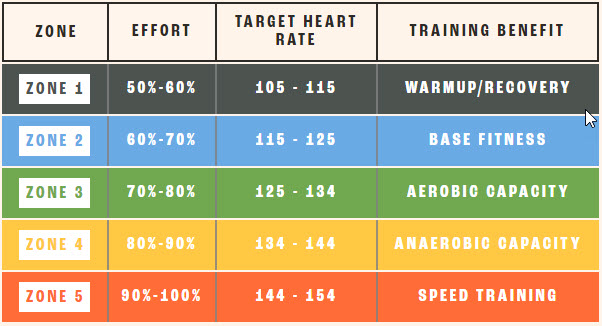
My Fitbit watch monitors my heart rate and automatically sends an alert when I go up or down a zone if I have exercise activated on my watch. My Fitbit zones are:
- Fat Burn Zone: heart rate between 97 – 117 bpm (zone 1/2)
- Cardio Zone: heart rate between 118 – 143 bpm (zone 2/3/4)
- Peak Zone: Above 144 bpm (zone 5)
I’ve added moderate and high intensity cardio into my exercise program by adding a slow jog into my weekday walks. Other options for moderate and high intensity cardio are exercise such as cycling, rowing, elliptical, stair machine, skipping rope.
Below is an example of implementing HIIT gradually over 12 weeks from Simon Hill’s Longevity Challenge.

Weekly Exercise Plan
I’m continuing to tweak my exercise as I’m working out what works or doesn’t work for me. Here’s what it currently looks like.
| Monday | Tuesday | Wednesday | Thursday | Friday | Saturday | Sunday |
|---|---|---|---|---|---|---|
| Walk/jog | Walk/jog | Walk/jog | Fitness Class | Walk/stairs | Social Walk | Social Walk |
| Skipping | Skipping | Skipping | Walk | Skipping | ||
| Resistance | Resistance | Resistance | Skipping | Resistance |
Here’s a rough summary of what it involves:
Walk/Jog
My goal is to 10,000 steps per day.
My week day walk is around 10,000 steps and involves walking from my house through a local nature reserve and back. I’ve deliberately selected a walk that includes a steep hill as I hate hills but know they are good for me. I’ve now added jogging to the walk when I reach the nature reserve as a time efficient way of achieving my moderate and high intensity cardio requirements while also being beneficial for bone health.
My jogging is similar to the Cliff Young Shuffle except I can’t jog as far or as long as he did!
Fortunately very few people walk in the nature reserve so it’s rare for anyone to see me jogging (as the World’s slowest jogger). I now jog up that hill I hate! – if you can call it a jog but it does increase my heart rate nicely.


Walk/Stairs
Once a week I try to include stair climbing into my walk as it works different muscles from walking or jogging and it is good for bone health. If my social walk on the weekend doesn’t include a location with stairs I try to go to a location nearby that has an exercise area with stairs.

Skipping
High impact weight bearing exercises is really important for bone health so I’ve added using a skipping rope after I’ve returned from my walk. The recommendation is 50 jumps per session. I’m slowly working towards skipping for longer as it is also helpful as a moderate and high intensity cardio workout.
Fitness Class
I’ve been working with Exercise Physiologists—to learn correct form, technique and suitable resistance training and balance exercise for where I’m at. They’ve helped me develop a resistance training program I can follow at home and once I week I attend their mixed circuit resistance training class.
Resistance Training
I’m still feeling my way with resistance training in terms of trying to work out how to make it a sustainable habit.
Currently I’m finding Michael Mosley’s exercise snacking is helping. “Exercise snacking” is where you do short bursts of exercise throughout the day rather doing it all at once in a full workout. Studies have shown that short bursts of exercise helps burn calories, lose more weight, help improve your blood glucose and blood pressure to a greater degree. Doing exercise in short chunks instead of one long session means you are activating your metabolism multiple times, making the health benefits even more impactful.
Below is the section on exercise snacking from Just One Thing which is my favorite Michael Mosley book.

I’m exercise snacking my resistance training by adding it as short exercises of at least 10 minutes minimum over a few hours later in the afternoon/evening. I have an exercise record sheet that lists the different types of exercise I can choose from and I mark of the number of sets I do for each exercise. My goal is 3 sets with 10 reps of an exercise, and working through the list of exercises. For example, during an exercise snack I might do 4 different types of resistance training exercises with 3 sets of 10 repetitions .
My husband has also started using exercise snacking for his resistance training and he reported that he finds it helpful and means he is more likely to do the exercise.

Here’s a link to my current exercise record.
Social Walk
I walk on Saturday and Sunday morning with a walking group (walks are organized on Meetup). We normally walk for just over an hour and then stop to chat afterwards over a coffee. My aim is to socialize while also benefitting from some exercise.
Here’s a photo of some of the group waiting at the bottom of the DNA tower in Kings Park while the rest of the group climbed the stairs to the top of the DNA tower.


Final Thoughts
My exercise program is safe for me because it has been customized to meet my specific needs and medical conditions, with guidance from Exercise Physiologists. It is important for me to remind you to always consult with a healthcare professional before starting any new exercise regimen to ensure it is safe and appropriate for your individual health status and goals.
My featured image on this post is a photo of me after I broke my leg – to remind myself of the importance of exercise and working on bone health.
I dedicated this post in loving memory of Michael Mosley, whose passion and dedication to health and wellness continue to inspire me. May his legacy of knowledge and compassion live on through our commitment to bettering ourselves and supporting others on their health journeys.





Leave a Reply